


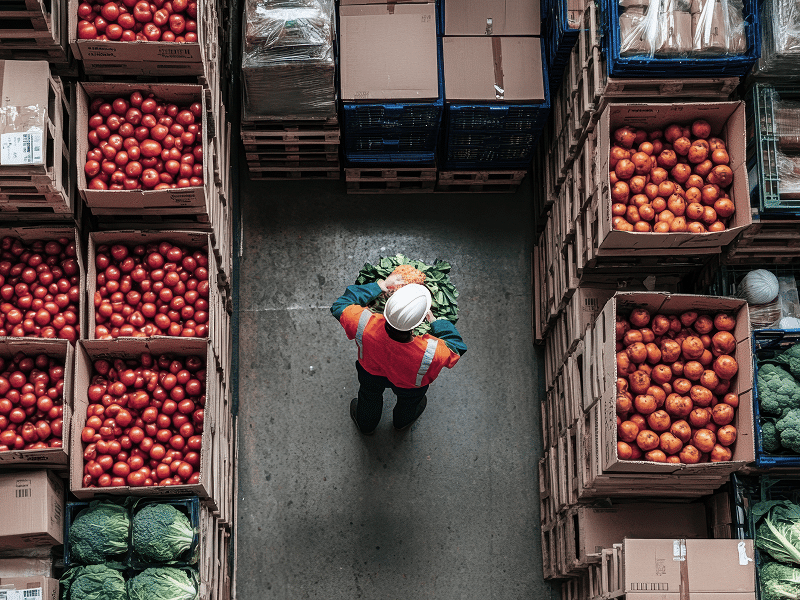
Asia-Pacific food import controls tightened sharply between late May and late June 2026, and they were the single busiest area of consumer-products regulation we tracked. Three forces pulled in the same direction: avian-influenza outbreaks closing borders to poultry, stricter exporter-registration demands for shipping into China, and physical enforcement against goods already inside a market illegally. For any brand whose supply chain touches the region, the message is consistent; origin status and documentation are being checked more closely, and a gap can stop a shipment at the dock.
Avian influenza is closing the poultry borders
Singapore’s Food Agency suspended imports of poultry and poultry products from the Netherlands and other areas affected by highly pathogenic avian influenza. Disease-driven suspensions move fast and ripple well beyond whole-bird products; egg powders, rendered fats, and processed inputs can all be caught. The exposure is rarely just the obvious SKU; it is the second- and third-tier ingredients sourced from an affected region without anyone flagging the link. Importers relying on affected origins should identifier alternative approved sources before a suspension of lands, not after stock is already stranded.
China is raising the bar for exporter registration
Australia’s Department of Agriculture, Fisheries and Forestry advised exporters on changes under China’s GACC Decree 280, which governs how overseas food establishments register to ship into China. Decree 280 has steadily tightened the link between a facility’s registration status and its ability to export, and renewals or re-categorizations can interrupt access if they lapse. A registration problem is functionally an import ban: the product is compliant in every other respect and still cannot enter. Businesses exporting food to China should confirm their establishment registration is current and correctly categorized.
Enforcement is turning physically, not just procedural
Indonesia’s BPOM seized a warehouse of illegally imported cosmetics in Tangerang valued at roughly 27.6 billion rupiah. Seizures of this scale show regulators actively pursuing unregistered product already inside the market, not just updating rules. A reminder that import compliance is a distribution-chain issue, not only a border one.
Grey-market imports create brand exposure even when the brand owner did nothing wrong, because enforcement and coverage rarely distinguish the importer from the name on the label. Know where your products sit in third-party distribution and whether every SKU is properly registered.
Quoi ce moyens for Consumer Products compliance équipes
Three mechanisms (disease suspensions, registration requirements, and physical enforcement) are tightening the same outcome: harder market access for anything with an origin or documentation gap. Treat import status as a live data points rather than an annual check. Verify approved-origin status for animal-derived inputs, confirm China exporter registrations are current and correctly categorized, and audit which SKUs are genuinely registered in each market. The cost of monitoring is trivial next to the cost of stranded stock. RegASK tracks import-control and food-safety changes like these across 160+ markets, so consumer-products teams catch them as signals rather than as stopped shipments.