


Regulatory teams work in an environment where regulatory change can carry implications across markets, product portfolios and business functions.
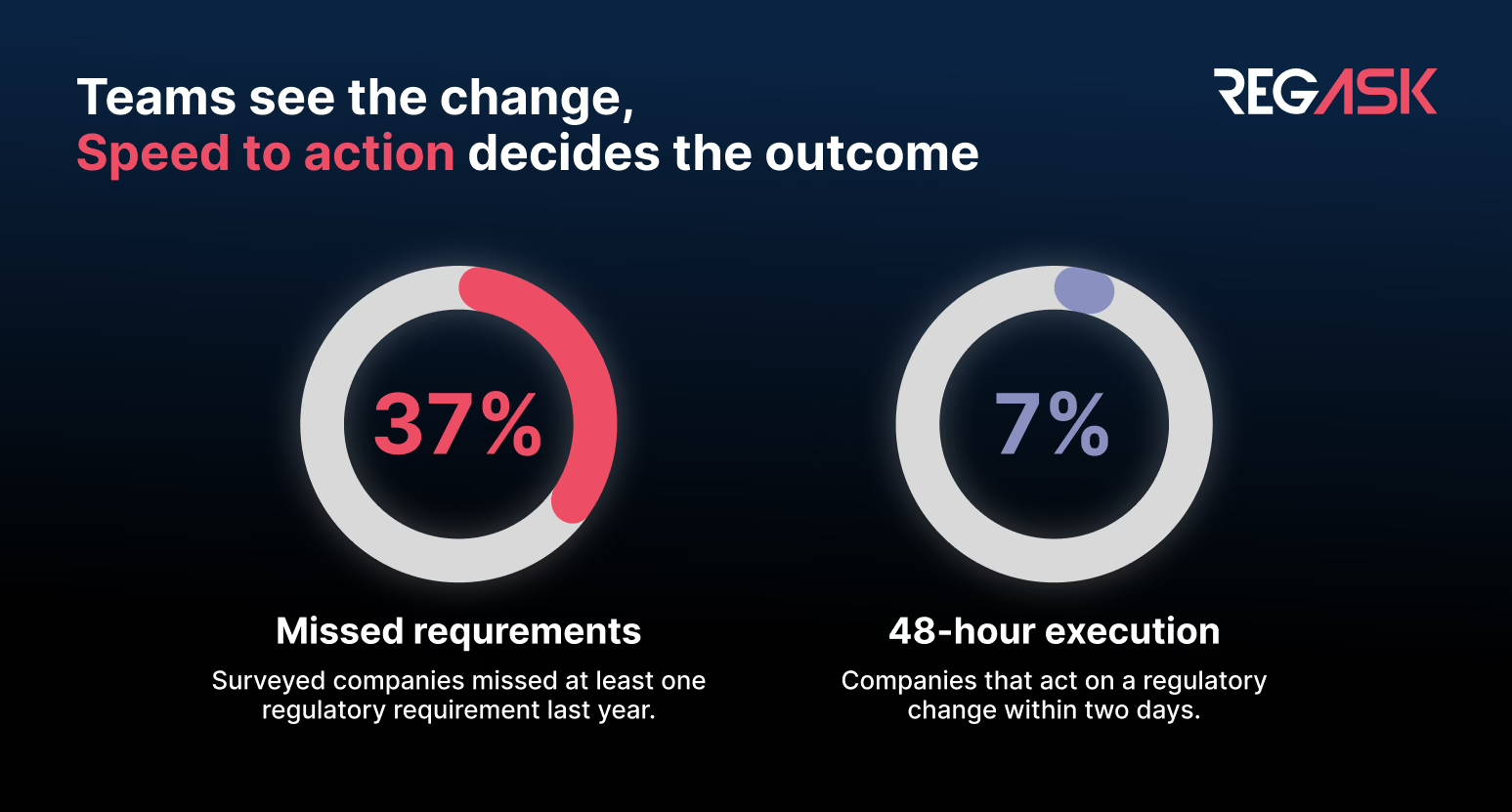
Figure 1. Source: RegASK, 2026 State of Regulatory Affairs and Compliance Report.
Last year’s SORAC survey showed a wide gap between detecting regulatory change and acting on it. Thirty-seven percent of organizations had missed at least one regulatory requirement in the previous year. Only 7% could identify a new regulation and execute a response plan within 48 hours.
AI adoption is also becoming an important part of the regulatory affairs conversation. Adoption figures on their own tell us little about results.
The questions now are where AI improves regulatory work, which use cases deliver measurable value, how organizations measure that value, and whether AI is beginning to change the operating model and the skills regulatory teams need.
Answering them means looking at what happens after a regulatory signal is detected. Organizations need to identify which developments matter, assess the impact quickly enough to support a decision, and coordinate the actions that follow across functions, markets and product portfolios.
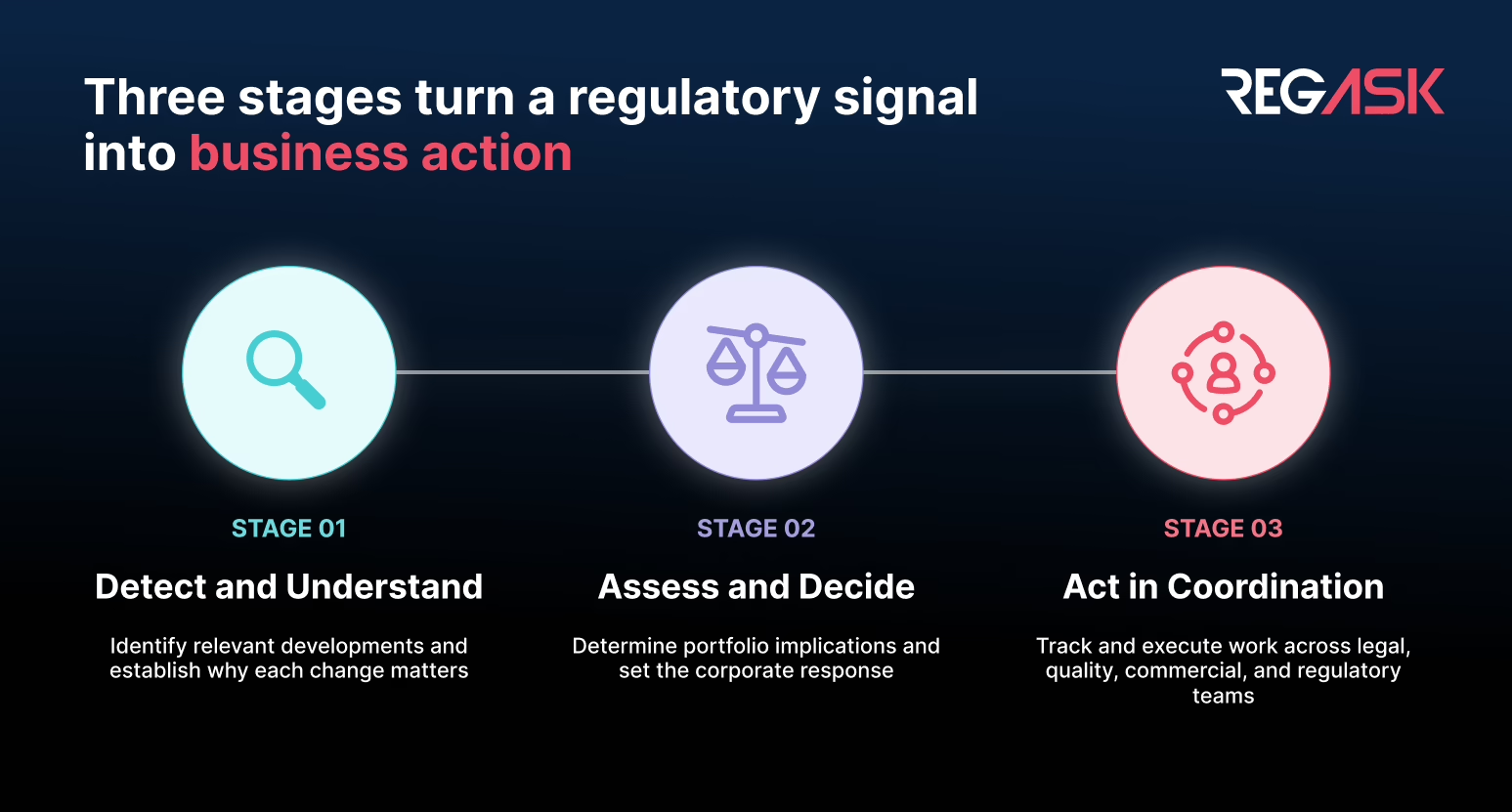
Figure 2. Three stages group the five elements of regulatory agility described below.
The 2027 State of Regulatory Affairs and Compliance Survey examines five related questions:
- How effectively can organizations turn regulatory change into action?
- Where is AI producing measurable value?
- Is AI affecting operating models and professional roles?
- How does regulatory affairs connect with broader business decisions?
- Can teams manage rising complexity with finite resources?
1. Are organizations getting better at turning regulatory change into action?
For years, regulatory intelligence has focused on one problem: identifying relevant regulatory change. That work remains essential. Detecting a new regulation, guidance or policy development starts the process.
Teams then need to understand what changed, judge its relevance to the organization, assess the potential impact and decide what happens next. Regulatory complexity becomes an execution challenge at that point.
A single development can carry implications across products, markets and business functions. Information often moves between regulatory affairs, quality, legal and commercial teams before the organization settles on a response.
One question for regulatory leaders is how performance should account for both the speed of detection and the effectiveness of assessment, decision-making and action.
What is regulatory agility?
Regulatory agility is an organization’s ability to detect, understand and respond to regulatory change. Speed matters, alongside what happens after detection.
An organization can identify a development quickly and still spend days assessing its significance. Completing an impact assessment leaves open the question of who acts. Even a sound decision needs visibility into whether the required work was finished.
Regulatory agility therefore depends on the connections between five stages:
- Detection: identifying relevant regulatory developments
- Understanding: establishing what changed and why it matters
- Impact assessment: determining the implications for products, markets and the organization
- Decision-making: setting the appropriate response
- Action: coordinating and tracking the work that follows
The 2026 SORAC findings suggest these connections remain difficult for many organizations. The distance between organizations missing requirements and those able to move from identification to an executed response within 48 hours raises a broader question about how regulatory performance should be measured beyond information access.
This year, RegASK is introducing the Regulatory Agility Index, designed to explore how prepared organizations are to assess and respond to regulatory change. Participants can opt in to receive their score alongside the full report.
How agile is your regulatory organization?
The 2027 SORAC Survey is open through Oct. 2. It takes approximately 10 minutes, and participants can opt in to receive their Regulatory Agility Index score alongside the full report.
Take the survey2. Is AI creating measurable value beyond adoption?
As AI adoption expands, the question shifts from whether organizations are experimenting with AI to whether that adoption produces measurable improvements in regulatory work.
An organization can deploy AI and still work at the same speed, with the same information and the same outcomes. The useful question is where AI improves results and where measurable value is emerging.
This year’s survey examines where AI creates measurable value in regulatory work, how governance is evolving and whether AI is making organizations more agile.
Rather than counting pilots underway or tools deployed, regulatory organizations can ask whether AI helps them:
- Surface relevant information more efficiently
- Reduce effort in high-volume regulatory tasks
- Support faster assessment and decision-making
- Connect regulatory information with company context
- Coordinate downstream workflows more effectively
This raises another question: what is the right balance of automation, AI and human expertise across different regulatory tasks? The survey will help explore where technology improves outcomes and where expert judgment remains central.
3. Is AI changing the regulatory operating model and the roles within it?

Figure 3. Where AI adoption meets the regulatory operating model.
AI adoption is often discussed as a technology decision. SORAC 2027 examines whether it also affects how regulatory work is organized.
Introducing AI into an isolated task can make that task faster. Regulatory work rarely happens in isolation. Research informs assessment, assessment informs decisions, and decisions create actions that involve multiple teams.
As AI moves from experimentation into regulatory operations, that distinction becomes more important. That means looking at where regulatory information enters the business, how it is triaged, how company context is applied, how consequential findings are reviewed, and how decisions become owned actions.
The 2027 survey explores how organizations are approaching them. Agentic AI adds another dimension. As AI capabilities extend across multiple stages of a workflow, organizations face questions about where these systems can be applied, where human review belongs and how accountability should be maintained.
Is AI reshaping the skills and roles regulatory teams need?
As AI becomes part of more regulatory workflows, a new question emerges: how could this change where professionals spend their time and where human expertise creates the most value?
Some activities that previously required significant manual effort are increasingly supported by AI. Finding information differs from interpreting it. Summarizing a development differs from determining whether it matters to a specific product portfolio. Identifying a potential issue is one step, and deciding how the organization responds is another.
SORAC 2027 will explore which skills organizations consider increasingly important as AI becomes part of regulatory work, including how teams are thinking about AI literacy, validation, contextual judgment, governance and cross-functional coordination.
The survey explores how AI is reshaping the regulatory function and its strategic role within the business, alongside changes in operating models. For leaders, that raises questions about skills, governance and accountability.
One possibility is that the regulatory workforce evolves by changing where and how expertise is applied. SORAC 2027 will test whether that shift is occurring.
4. Is regulatory agility becoming a broader business capability?
The need for agility becomes most visible when regulatory change meets broader business disruption.
Tariffs and trade policy shifts can affect market access and regulatory operations. A single policy change can carry consequences for products, supply chains and commercial plans across multiple markets. This year’s survey examines those effects directly.
Regulatory affairs connects external change with business response. When an organization evaluates where it can launch, continue selling or adapt a product, regulatory information becomes part of a larger commercial and operational decision.
This raises a broader question about the role of regulatory affairs in helping the business understand change early enough to act.
SORAC 2027 examines whether organizations increasingly see regulatory agility as relevant to resilience, market access and the speed of decisions beyond the regulatory function itself.
5. Can organizations absorb more complexity without adding resources at the same rate?
Previous SORAC findings have highlighted the gap between regulatory workload and available resources.
This year’s edition examines whether that gap is changing, and how organizations are responding. Are teams adding headcount, redesigning workflows, using AI to reduce manual work, or changing which expertise is required and how it is allocated?
AI makes this question particularly relevant. This raises the question of whether technology alone is enough to address operating-model challenges.
SORAC 2027 will explore how connections between regulatory intelligence, impact assessment and execution affect the flow of regulatory work.
Understanding whether organizations are redesigning regulatory work, rather than automating individual activities, forms an important part of the 2027 benchmark.
Building the regulatory benchmark for 2027
Now in its third year, the State of Regulatory Affairs and Compliance Survey provides an annual industry benchmark examining the risks, priorities and resources shaping regulatory affairs across life sciences and consumer products. Findings from the previous edition were cited in The Wall Street Journal’s Morning Risk Report.
The 2027 edition examines five related questions: how effectively organizations can move from regulatory change to action; where AI is producing measurable value; whether AI is affecting operating models and professional roles; how regulatory affairs connects with broader business decisions; and whether teams are finding new ways to manage rising complexity with finite resources.
Taken together, these themes address a larger question: are organizations becoming better equipped to turn regulatory change into timely, informed action?
The findings will provide a new view of regulatory agility across the industry heading into 2027.
Take part in the 2027 State of Regulatory Affairs and Compliance Survey
The 2027 State of Regulatory Affairs and Compliance Survey is open through Oct. 2, 2026. Regulatory affairs, compliance, quality and business leaders across life sciences and consumer products worldwide are invited to participate.
The survey takes approximately 10 minutes and adapts to each respondent’s role. All responses are confidential and reported only in aggregate. Participants can opt in to receive their Regulatory Agility Index score alongside the full report.
The findings will be published in the 2027 State of Regulatory Affairs and Compliance Report in November 2026.