
The world of Regulatory Affairs is undergoing a significant shift. For decades, it has been a behind-the-scenes powerhouse, ensuring that products meet regulatory requirements and reach markets safely and compliantly.
That core mission remains unchanged.
Was Ist changing is the complexity and speed of the regulatory environment. Global markets are more interconnected than ever, regulations evolve rapidly, and organizations must respond faster while maintaining strict compliance.
This makes efficient regulatory intelligence and execution more critical than ever.
Three Forces Reshaping the Regulatory Landscape
Global Interdependence Is The New Normal
The days of working in bordered silos are fading. Emerging markets, reliance pathways, and regional regulatory collaboration mean that one regulatory development can have implications across multiple jurisdictions.
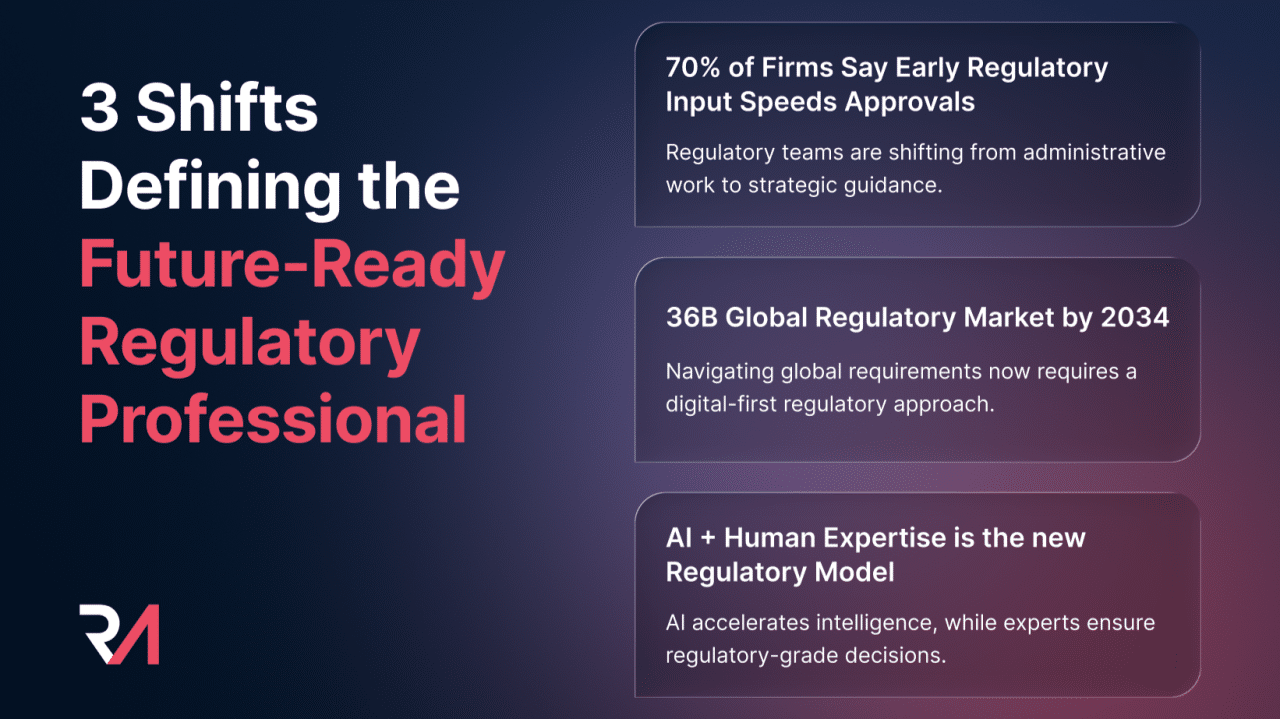
As the global regulatory affairs market is expected to grow to over $36 billion by 2034, regulatory teams must monitor developments across regions and ensure that compliance strategies remain aligned globally, whether launching a skincare product, a medical device, or a therapeutic treatment.
Access Considerations Are Expanding
In Life Sciences, regulatory approval is only one step toward market access. Payers and Health Technology Assessment (HTA) bodies increasingly shape whether therapies and medical devices reach patients.
While dedicated market access teams often lead these efforts, regulatory professionals play a crucial role in ensuring that evidence, claims, and documentation meet evolving requirements across jurisdictions.
The same principle extends beyond pharma and MedTech. Consumer health and supplement companies must also stay ahead of shifting safety standards, labelling rules, and product claims to maintain compliant market access and consumer trust.
AI and Digital Transformation Are Improving Efficiency
AI and digital technologies are transforming how regulatory teams track requirements, monitor regulatory changes, and manage documentation.
Yet many organizations still rely heavily on manual processes. In MedTech, for example, an estimated 67% of companies continue to depend on manual workflows, highlighting a significant opportunity for digital transformation.
When used responsibly, AI can help automate repetitive monitoring and data-processing tasks, freeing regulatory professionals to focus on interpreting regulatory changes, ensuring compliance, and supporting implementation across the organization.
Human expertise remains essential. Technology can accelerate information processing, but regulatory judgment and scientific rigor must always guide decisions.
The Future-Ready Regulatory Professional
Today’s regulatory professional continues to serve as a guardian of compliance, while also helping organizations navigate increasingly complex regulatory environments.
Future-ready regulatory teams will:
- Monitor global regulatory developments proactively
- Use digital tools and AI to improve efficiency and visibility
- Translate regulatory changes into clear, actionable guidance for internal teams
- Support compliant product development and market entry across regions
Die Bibliothekarin und der Detektiv
Regulatory Affairs remains fundamentally about ensuring compliance and protecting public health.
But in a world of rapidly evolving regulations, organizations that equip regulatory teams with the right intelligence, data, and digital tools will be better positioned to respond quickly and implement regulatory requirements effectively.
The goal isn’t to replace compliance with strategy, it’s to strengthen compliance through better insight, faster information, and smarter execution.